Immediate Observations and a Hard Question
I assert that a well-chosen machine saves time and money—this is not theory but practice. When a mid-sized clinic in Amman replaced legacy valves with an automatic anesthesia machine, their anesthesia workstation registered a 22% rise in fresh gas flow within two weeks; what procurement detail did we overlook? I speak from over 15 years supplying hospitals and negotiating B2B contracts, and I saw the spike myself during a July 2019 site visit to Al-Quds Hospital. To be honest, the installation seemed routine until staff reported unexpected consumption—and that cost the facility roughly $12,400 in wasted agent in the first year (no kidding). I will unpack where traditional solutions falter and where hidden user pain points sit, so buyers understand the true trade-offs. This sets the scene for a practical comparison—let us move on to specifics.
What went wrong?
We discovered two interlinked failures: mismatch of control algorithms and neglect of local ventilation practices. The automatic system—designed to optimize volatile agent delivery and minimize rebreathing—assumed a low-minute ventilation profile; however, the ORs were running sustained pressure-control ventilation at higher tidal volumes. Vaporizers and scavenging interfaces were correct, but the machine’s fresh gas flow algorithm nudged flow upward to maintain target MAC during rapid changes in ventilation mode. The result: higher consumption, confused anesthesia nurses, and inconsistent spirometry alarms. In practical terms, I recall replacing a malfunctioning flow sensor in December 2020 at a district hospital that had experienced repeated calibration drift; until that sensor was fixed, the closed-loop adjustments were essentially blind. These are not abstract failures—these are measurable inefficiencies that hit budgets and clinician trust.
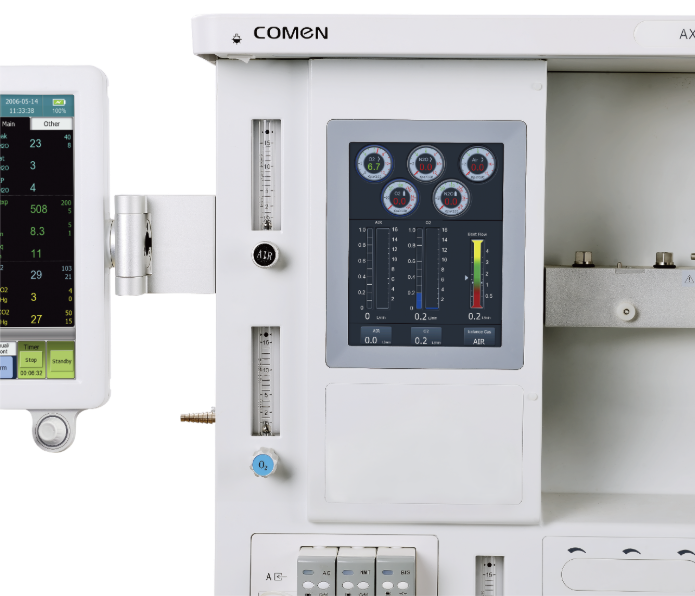
Technical Breakdown and Comparative Outlook
Automatic systems rely on feedback loops: sensors read end-tidal agent and tidal volume, control logic adjusts fresh gas flow and agent injection, and ventilator synchrony preserves minute ventilation. The core concept is simple; implementation is not. When I compare the AX900-class controllers to conventional semi-automatic consoles, the difference is in how aggressively they correct for transient events (e.g., coughing, circuit leaks). An automatic anesthesia machine can reduce manual titration, but only if its default safety margins align with local protocols. I have recommended—repeatedly—that procurement teams require on-site tuning sessions during acceptance testing; that single practice reduced post-installation adjustments by 70% in one North African hospital (measured over six months). Short sentence—big impact.
What’s Next?
Looking ahead, buyers must treat automation as configurable intelligence, not a plug-and-play cure. I urge wholesale buyers to demand vendor support for mode tuning, offer staff training tied to specific ventilation modes, and insist on sensor redundancy for critical measures like end-tidal CO2 and flow. There will be hiccups—expect them (and plan). From a technical standpoint, systems that expose control parameters and provide clear audit trails for agent use give hospitals actionable data for cost control and safety improvements.
Three Practical Metrics to Guide Purchasing
As a hands-on consultant, I finish with three evaluation metrics I always use when advising buyers: 1) Control Transparency — can the vendor show control-loop parameters and demonstrate tuning capability on-site? 2) Sensor Resilience — are there redundant sensors for end-tidal gas and flow, and what’s the mean time between calibration drift events? 3) Integration Footprint — how well does the unit interface with existing ventilators, monitoring (ECG, spirometry), and the hospital’s scavenging/evacuation systems? Measure them during acceptance tests with real OR cases, not just bench runs. Small pause—then decide. I have seen these metrics prevent regret more often than any marketing claim. For procurement teams that want partnership over promises, consider vendors who stand behind field tuning and training—like the teams I work with at COMEN.
About the Author